Why Traditional Customer Support Channels No Longer Work
Customer expectations have changed faster than support infrastructure.
- Email was built for long-form communication, not urgent problem-solving. Customers wait hours or days for replies, repeat themselves, and lose context.
- Phone support is expensive to scale and frustrating for customers who must wait on hold and explain the same issue multiple times.
- Website live chat forces customers to stay on a single screen. If they leave, the conversation often disappears.
From a business perspective, these channels increase:
- Average handle time
- Support costs
- Customer frustration
- Churn risk
WhatsApp succeeds not because it is “new,” but because it fixes the structural problems of legacy support channels.
Who Should Use WhatsApp as a Primary Support Channel?
WhatsApp support delivers the highest impact for:
- E-commerce and D2C brands (order tracking, returns, payments)
- Travel and logistics companies (real-time updates)
- Banks and fintech (alerts, verification, assistance)
- Healthcare providers (appointments, follow-ups)
- SaaS companies with mobile-first users
8 Reasons WhatsApp Customer Support is Better Than Traditional Channels
WhatsApp addresses the core limitations of traditional support channels by reducing customer effort, preserving context, and enabling faster, more trusted communication. Here are the reasons which break down, both from the customer and business perspectives, and why WhatsApp consistently outperforms email, phone, and website chat in real support scenarios.
1. Customers already spend their time on WhatsApp
WhatsApp has more than 2.7 billion active users. It is not just another channel; it is the place where customers already spend a major part of their digital day, chatting with friends, coordinating work, sending pictures, and even making voice and video calls.
When support becomes available on a platform the customer already uses naturally, friction disappears. No app switching, no waiting in phone queues, no searching for support emails.
Example:
A customer facing a payment problem prefers sending a quick screenshot on WhatsApp rather than writing a long email.
2. WhatsApp works synchronously and asynchronously at the same time
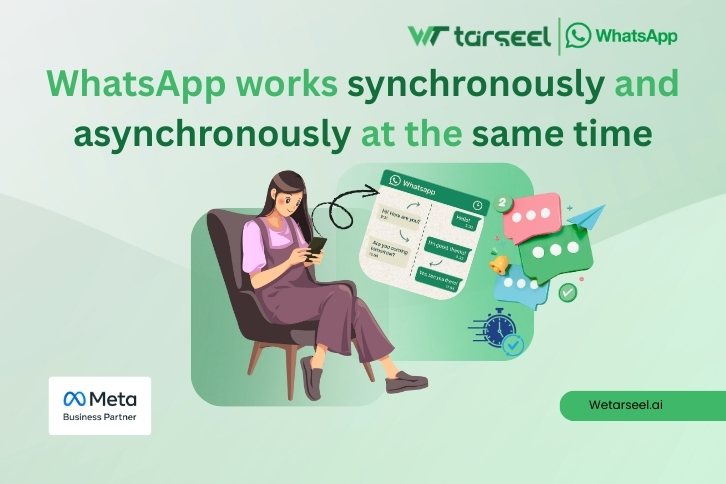
Traditional support channels force customers to communicate in only one way. Phone calls demand instant availability. Email forces a slow back and forth. Live chat closes if the customer leaves the screen.
WhatsApp blends both perfectly. Customers can chat instantly, pause anytime, and continue later without losing context. Businesses can reply in real time or follow up whenever needed. The entire conversation remains in a single thread.
Example:
A travel agency can instantly confirm a booking and then send itinerary updates hours later, all inside the same WhatsApp conversation.
Why WhatsApp Reduces Customer Effort More Than Any Other Channel
Modern support success is often measured by Customer Effort Score (CES), how easy it is for a customer to get help.
WhatsApp reduces customer effort because it:
- Requires no new app or login
- Preserves conversation history automatically
- Supports rich context (images, voice, documents)
- Works across time without session expiry
Lower effort directly correlates with:
- Higher satisfaction
- Better retention
- Increased lifetime value
This shows you understand support metrics, not just tools.
3. WhatsApp creates trust with verified profiles and secure communication
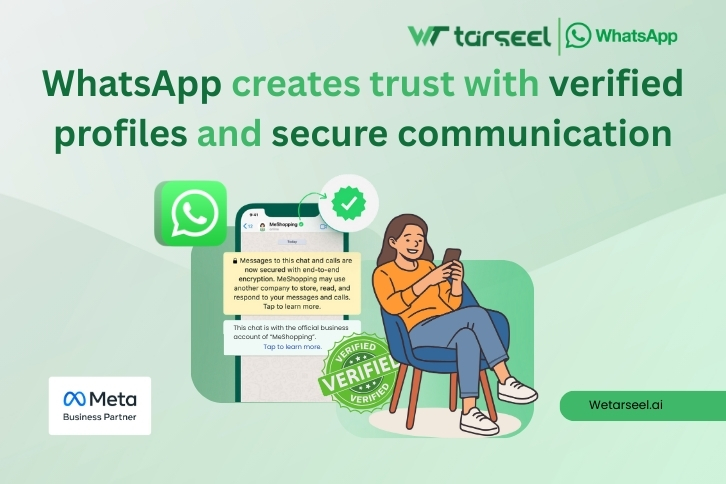
Customers today are cautious of unknown emails and phone numbers. WhatsApp solves this with verified business profiles and end-to-end encryption. Customers see your official name, logo, business description, and contact information directly inside the chat.
This creates a high-trust environment, which is especially useful for finance, healthcare, and e-commerce companies.
Example:
A bank can send fraud alerts through its verified WhatsApp channel, and customers instantly know the message is authentic.
4. Multimedia support speeds up problem-solving
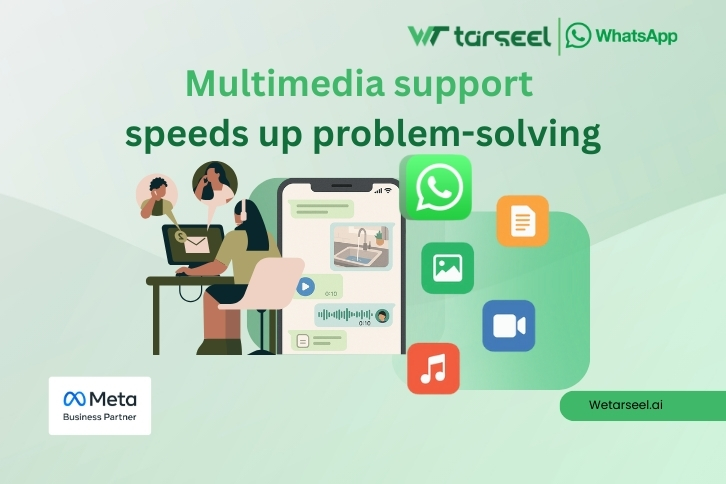
WhatsApp is not limited to text. Customers can send voice notes, images, videos, documents, and even location pins. This helps support teams solve problems faster and more accurately.
Example:
A customer struggling with a device can send a short video. The support agent can understand the issue immediately rather than asking multiple clarifying questions.
5. Automation feels conversational rather than robotic
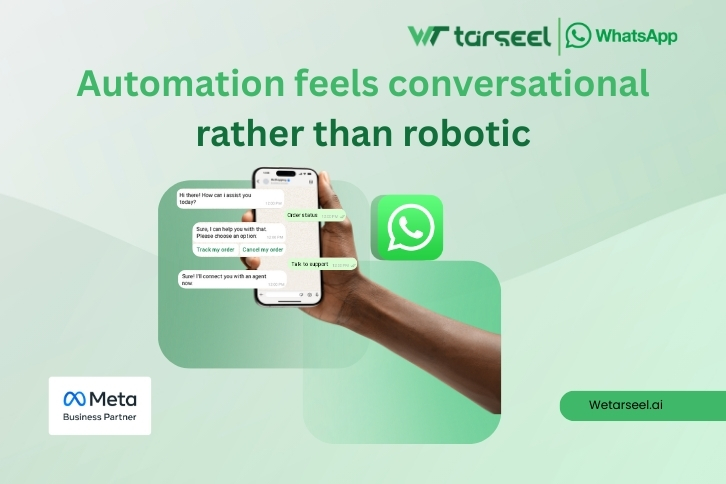
Generic chatbots often fail because they feel cold and repetitive. WhatsApp automation, when done properly, feels natural and human. Features like quick replies, guided buttons, structured messages, and WhatsApp Flows create a smooth experience.
Automation can handle frequently asked questions, appointment scheduling, order tracking, payment reminders, product discovery, and much more. At the same time, it reduces the workload on support teams.
The key difference between effective WhatsApp automation and frustrating chatbots is escalation design. Automation should handle repetitive, predictable tasks, and hand off to humans the moment complexity or emotion appears.
Example:
An online store can automate order status queries, which usually make up almost half of all support tickets.
6. WhatsApp messages achieve almost perfect visibility
Emails often get buried, sent to spam folders, or simply ignored. WhatsApp messages usually get opened within minutes. This makes WhatsApp perfect for time-sensitive updates.
Example:
Airlines notify passengers about gate changes and delays on WhatsApp because customers will definitely see the message.
7. WhatsApp integrates smoothly with CRMs and helpdesk systems
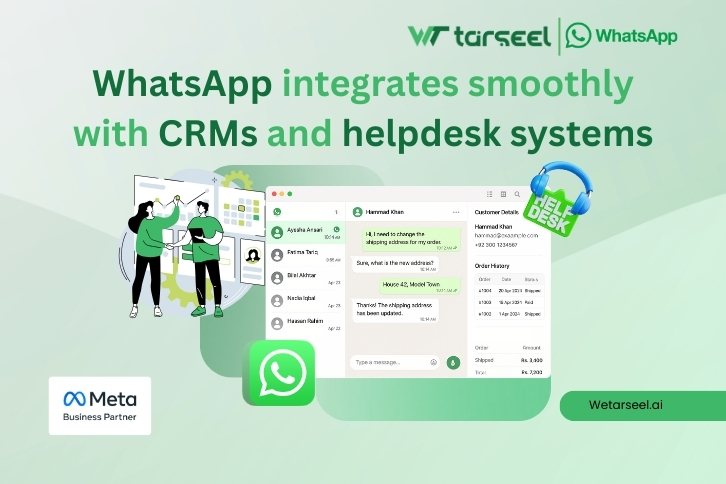
WhatsApp is no longer just a chat app. With the WhatsApp Business API, companies can connect it with their CRM, ticketing system, AI assistant, customer database, and call centre tools. It becomes a complete support channel rather than an additional inbox.
Example:
Support agents can respond on WhatsApp while viewing the customer’s order history and past conversations inside their CRM dashboard.
8. WhatsApp matches the future of communication
Customer behavior is shifting toward mobile-first, instant, personal communication. WhatsApp fits all three perfectly. It is fast, familiar, and built for daily use.
The future of support is not about being available everywhere; it is about being available where customers prefer to talk.
Right now, that place is WhatsApp.
WhatsApp Customer Support vs Traditional Live Chat vs Chatbots
| Channel | Main Limitation |
|---|---|
| Live Chat | Session-based, screen-dependent |
| Chatbots | Scripted, low trust, limited context |
| Persistent, human-first, mobile-native |
Final Thoughts
WhatsApp is not replacing customer support. It is redefining how support fits into daily digital life.
The companies winning today are not those adding more channels, but those reducing friction and meeting customers where they already communicate.
WhatsApp happens to be that place.
For businesses willing to design support around real customer behavior rather than legacy systems, WhatsApp is not a future trend.
It is a present advantage.