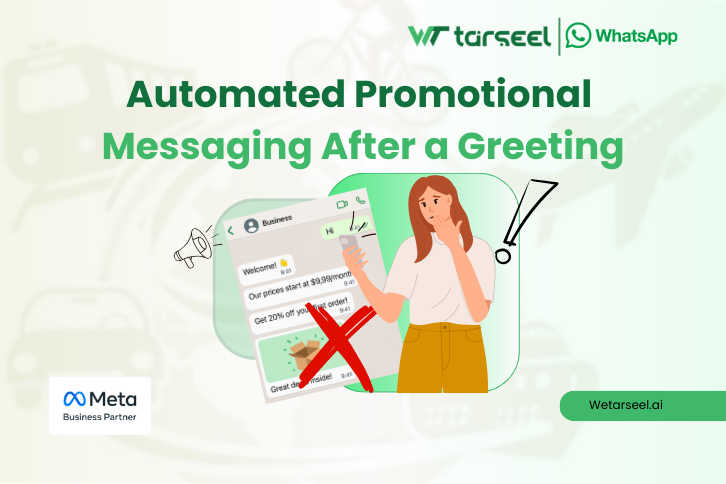

1. Automated Promotional Messaging After a Greeting
The most critical issue is the automated response behavior.
When a user sends a simple greeting such as “Hi” or “Hello,” WhatsApp classifies this as the start of a service conversation, not a request for marketing.
Automatically sending a sequence of messages that includes:
- A welcome message
- Product descriptions
- Pricing details
- Delivery information
- Images and videos
- Promotional offers
is treated as unsolicited marketing.
WhatsApp policy explicitly prohibits sending promotional content unless the user has clearly opted in to receive it. A greeting alone does not constitute consent.
From Meta’s perspective, this behavior resembles broadcast-style marketing, even if messages are sent one-on-one.
2. Sending Multiple Promotional Messages in Succession
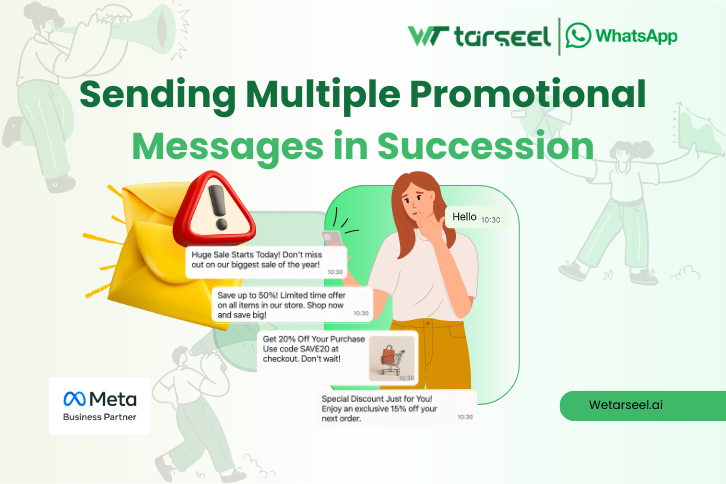
Sending several messages back-to-back immediately after a user’s first message is a major enforcement trigger.
This includes:
- Multiple text messages
- Sequential product explanations
- Pricing followed by offers
- Delivery promises or discounts
Even if each message is individually compliant, the sequence itself violates policy when it delivers marketing content without explicit user intent.
WhatsApp’s systems are designed to detect patterns that resemble bulk outreach or scripted promotional funnels.
3. Automatic Sending of Images, Videos, and Audio
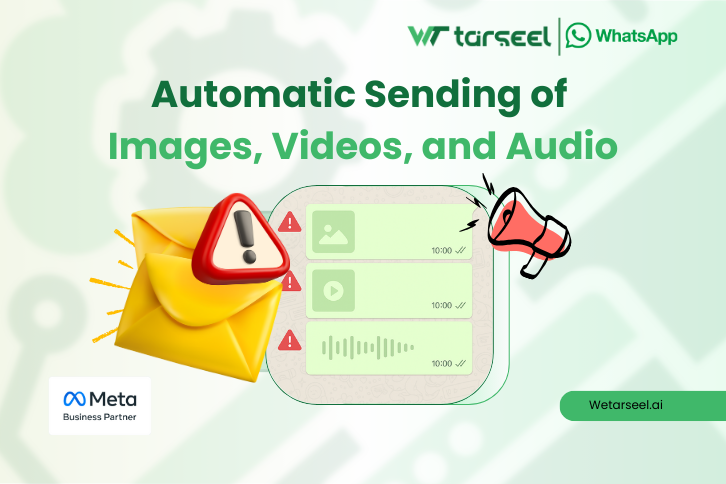
Meta applies significantly higher scrutiny to accounts that automatically send media files.
Automatically delivering:
- Images
- Videos
- Audio messages
- Design previews
- Catalog-style visuals
without the user explicitly requesting them is a common reason for restriction.
When media is sent:
- Immediately
- In high volume
- As part of a fixed automation flow
- Repeated across multiple users
it is flagged as spam-like behavior, regardless of the business size or legitimacy.
4. Behavioral Patterns Matter More Than Content
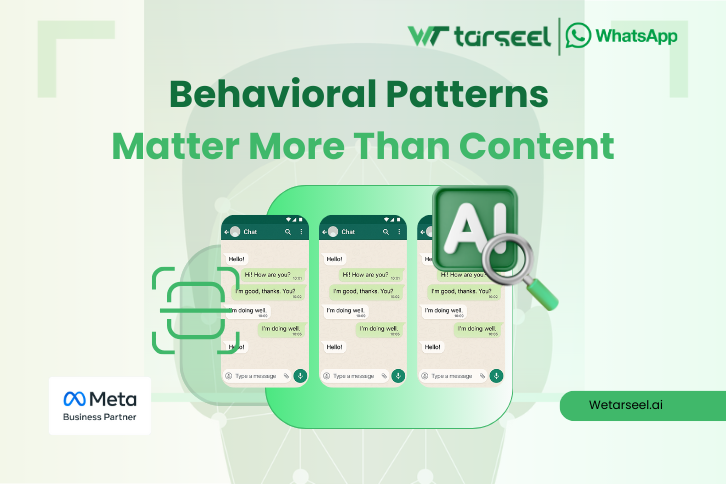
WhatsApp does not evaluate messages in isolation. It evaluates patterns.
The following pattern is frequently flagged:
- User sends greeting
- Business automatically sends text, images, video, and offers
- Same flow is repeated for many users
- All actions are automated
This combination signals abusive automation, even if no single message violates policy on its own.
Meta’s enforcement systems are behavior-driven, not purely content-driven.
5. No Explicit Opt-In for Marketing Content
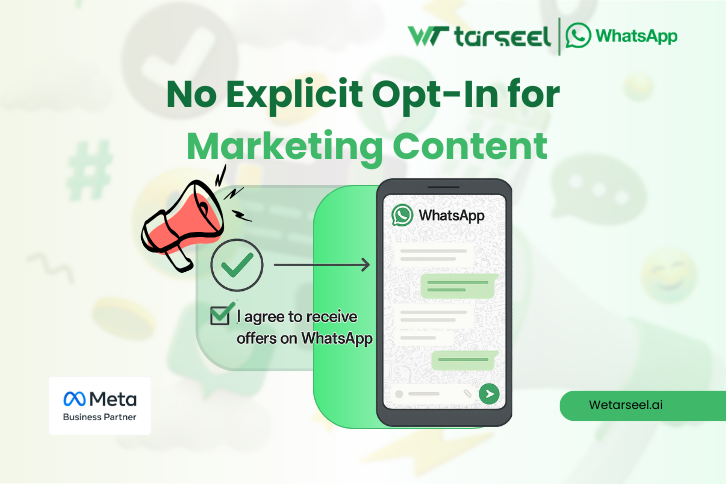
WhatsApp requires that users explicitly opt in to receive marketing messages.
A valid opt-in must be:
- User-initiated
- Clear about what type of messages will be sent
- Associated with the business identity
- Stored by the business
A user who sends “Hello” has not opted in to receive:
- Product promotions
- Pricing information
- Images or videos
- Offers or discounts
- Delivery details
Sending this content without consent violates the Business Messaging Policy.
6. Promotional Content Inside a Service Conversation
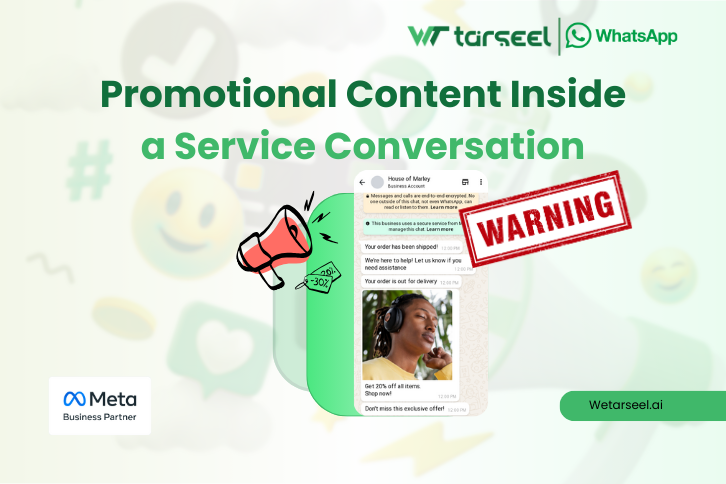
The messages sent included clear marketing elements:
- Product descriptions
- Pricing
- Offers such as free delivery on bulk orders
- Visual promotional material
Marketing content must be sent using:
- Approved marketing templates
- A paid marketing conversation
- Clear user-initiated intent
Sending marketing content inside a standard service conversation, without a template, is a policy violation.
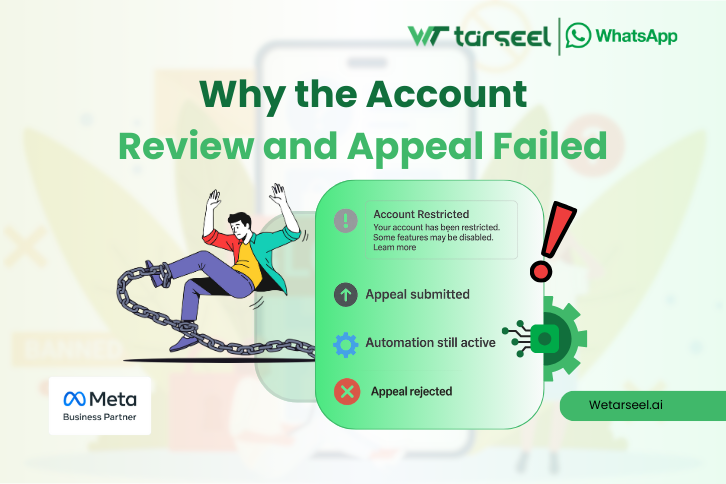
When an account is restricted, Meta reviews:
- Historical messaging behavior
- Automation logic
- Frequency and repetition of promotional content
- Media usage patterns
If the automation remains active during the appeal process, the restriction is almost always upheld.
At that point, Meta interprets the behavior as intentional misuse, not a configuration error.
Appeals that focus only on message wording, while ignoring automation behavior, typically fail.