Typing is a time-consuming task, and people living in this fast-paced world need quicker and easier ways. In business communication, this ease is provided by voice messaging. However, for this feature, businesses need tools that keep up.

Multilingual voice transcription AI is one of those transformative technologies, converting spoken voice notes into readable, searchable text and enabling advanced AI-powered business conversations with customers in their own language.

Today, innovative platforms like Wetarseel AI are changing how businesses handle voice communication by supporting AI-powered voice transcription in 100+ languages and local dialects, and by adding intelligent conversational AI that understands business intent, answering queries, qualifying leads, and escalating to human agents smoothly when needed.

Below, we break down what this technology does, why it matters, how it works in real business contexts, and what features truly make a difference.

Table of Contents

What Is Multilingual Voice Transcription AI?

At its core, multilingual voice transcription AI refers to systems that automatically convert spoken audio into text. However, modern platforms go beyond that, embedding natural language understanding so they can interpret customer intent and context.

This means:

  • A voice note in Urdu, Arabic, English, Spanish, or other languages is automatically turned into text.

  • The AI can then understand what the customer wants, not just transcribe the words.

  • Conversations can be routed to AI responses or handed over to human teams with context included.

This capability is a step above old-style speech recognition because it adds business-relevant understanding, not just literal text conversion.

Why This Matters for Business Today

Customers Prefer Voice Messaging
Post 01 2 4

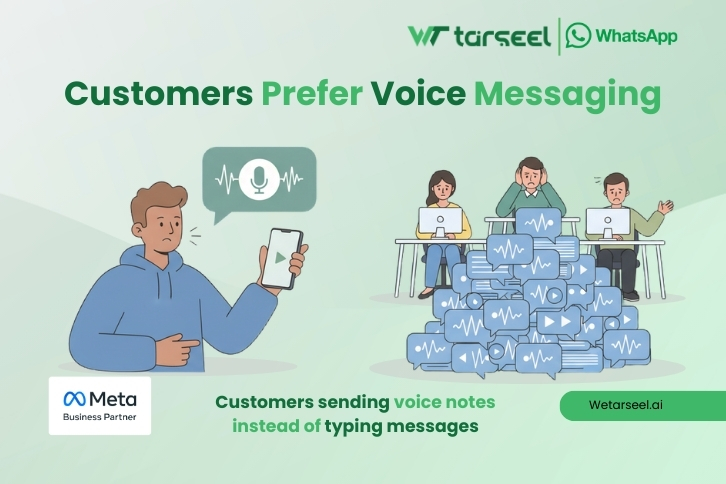
Voice messaging has exploded in popularity because it is faster and feels more natural than typing, especially on mobile devices in the Subcontinent and Gulf markets. Businesses that can’t efficiently handle voice notes risk slower replies, frustrated customers, and lost opportunities.

Moreover, major messaging platforms are adding native voice transcription features because of demand. For example, WhatsApp now rolls out voice message transcription, showing how important voice → text conversion has become in real communications.

Business Efficiency, Save Time & Costs
Post 01 3 4

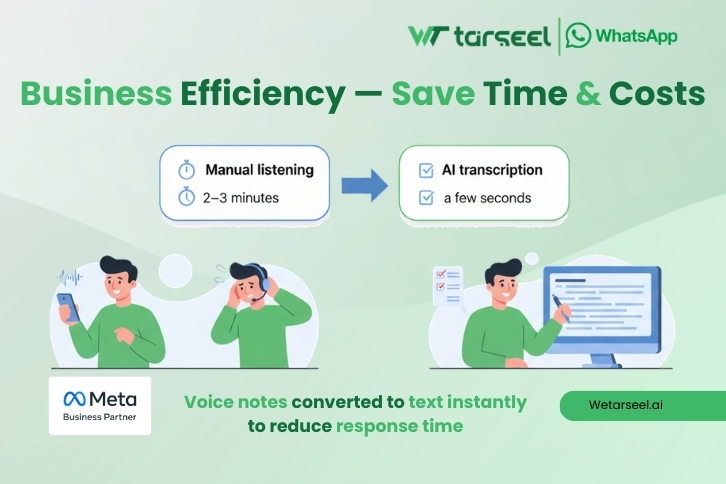
AI-powered speech-to-text systems automate what used to be a manual, time-consuming task. Real-time transcription frees your team from listening and typing, letting them focus on actual responses and resolutions.

Independent studies of voice AI across industries show dramatic gains in speed and efficiency. For example:

  • Companies integrating voice AI see 40 % faster response times to customer inquiries.

That’s especially important when customer questions pile up, and slow responses hurt conversions.

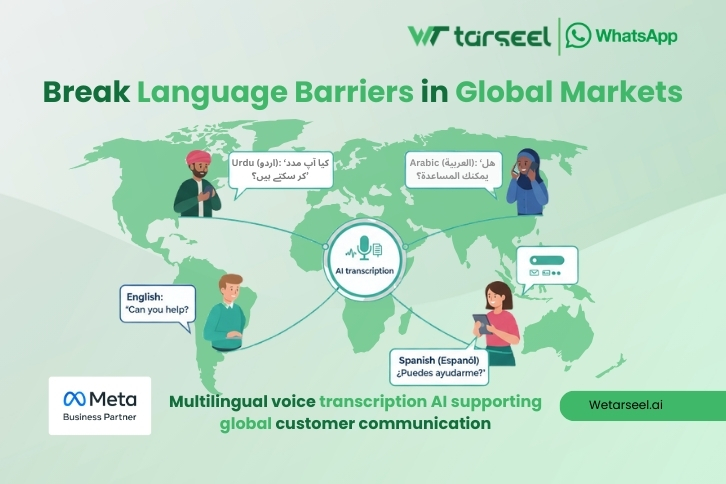
Break Language Barriers in Global Markets
Post 01 4 4

One key advantage of multilingual AI is global reach. Voice AI systems now support dozens, and in some tech advances, even hundreds of languages, meaning local dialects and non-English customers don’t get left behind.

While exact language counts vary by system, research shows that speech recognition AI can support 100+ languages — extending global business reach without needing large multilingual teams.

This directly matches what Wetarseel AI offers: voice-to-text in any language, including local regional dialects.

What Advanced AI Conversations Actually Do?

Modern voice transcription isn’t just about turning audio into words. The real power comes from integrating that text into AI conversation systems that can:

Understand Intent

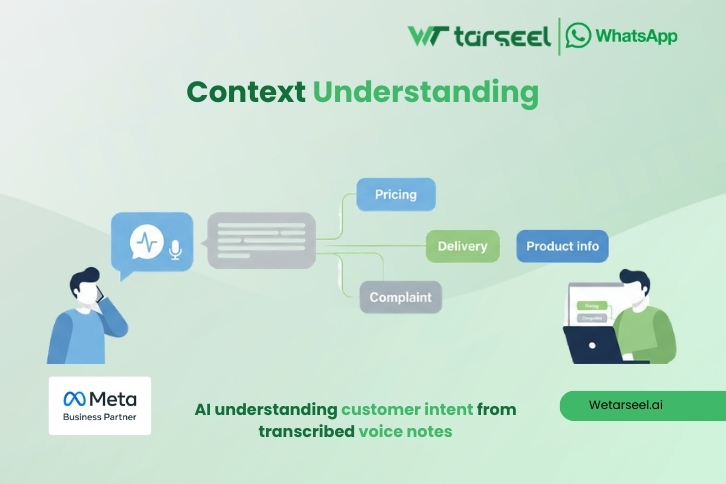
The AI can detect whether a customer is asking about pricing, support, delivery times, or product features — meaning responses are contextual, not generic. This is far beyond basic transcription.

Respond Automatically or Route to Humans


Smart systems can:

  • Answer simple questions automatically

  • Qualify leads by asking follow-ups

  • Escalate complex queries to humans

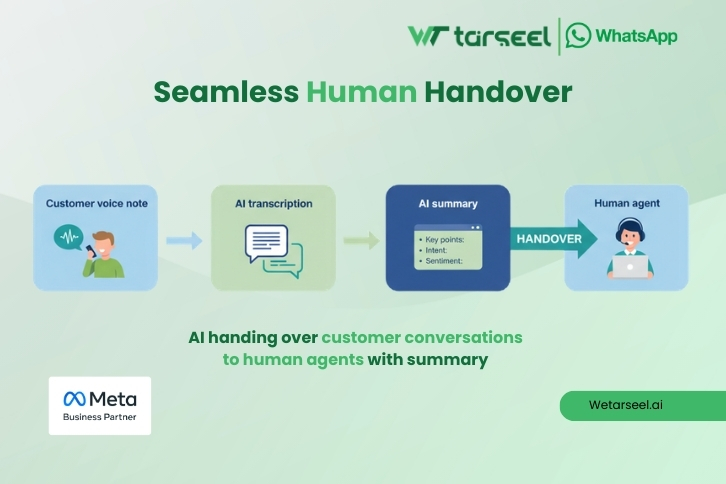
  • Provide agents with full summaries so they don’t start blind

This blend of automation and human support keeps service fast without losing accuracy.

Essential Features to Look For (And Why They Matter)

If you’re considering this technology for your business, here’s what truly matters:

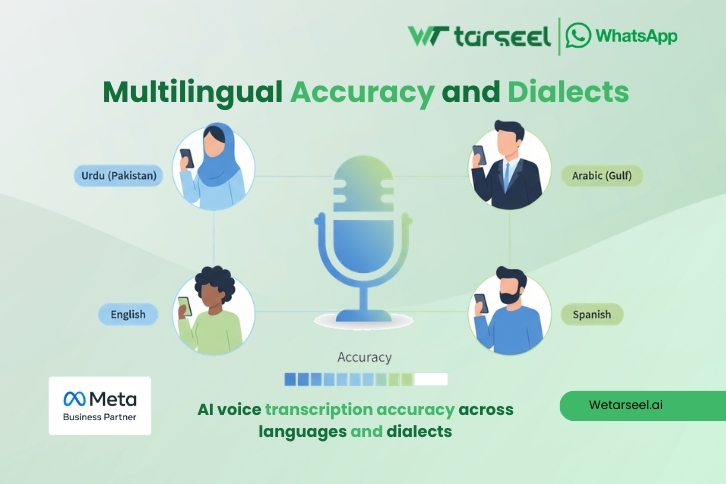
Multilingual Accuracy and Dialects
Post 01 5 4

Basic speech-to-text can miss nuance or local accents — real business tools handle local speech patterns reliably, making responses more accurate.

Context Understanding
Post 01 6 2

AI should be able to understand what the customer means — not just what they said. This is where basic voice transcription falls short and advanced AI shines.

Seamless Human Handover
Post 01 7 2

When a question gets too specific or sensitive, the system should transfer the chat to a human agent with context already attached — saving time and avoiding repeated questions.

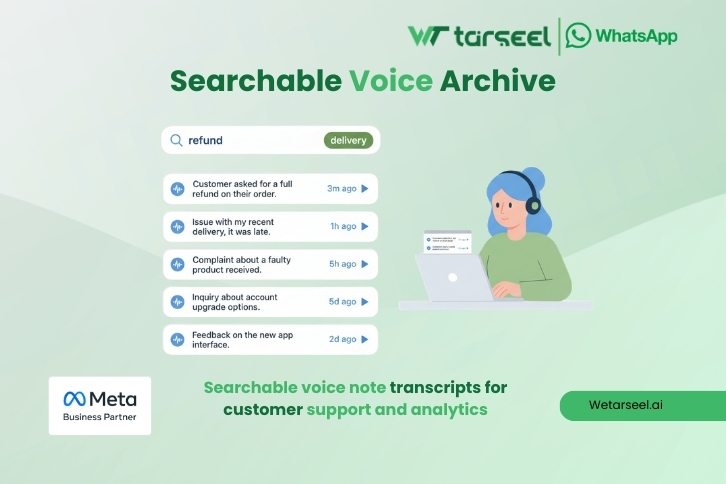
Searchable Voice Archive
Post 01 8 1

Transforming voice into searchable text means you can find customer conversations fast — whether for compliance, analytics, or coaching.

Real Business Impact: What Companies Are Seeing

Across industries that use voice AI:

  • Customer wait times can drop significantly

  • Response rates improve because voice content becomes searchable

  • Support teams scale without proportionally growing headcount

Independent market data shows voice AI systems have been linked to:

  • 25 % reduction in operational costs

  • 30 % faster customer service handling times

  • 64 % of businesses viewing voice AI as key to digital strategy

These figures represent broad industry adoption of advanced speech AI

Conclusion

Businesses today must adapt to how people prefer to communicate.

This is not future tech; it is state-of-the-art technology already reshaping customer engagement globally. The companies that adopt it now will be the ones that respond faster, communicate better, and grow stronger in a voice-first world.