
Key Points
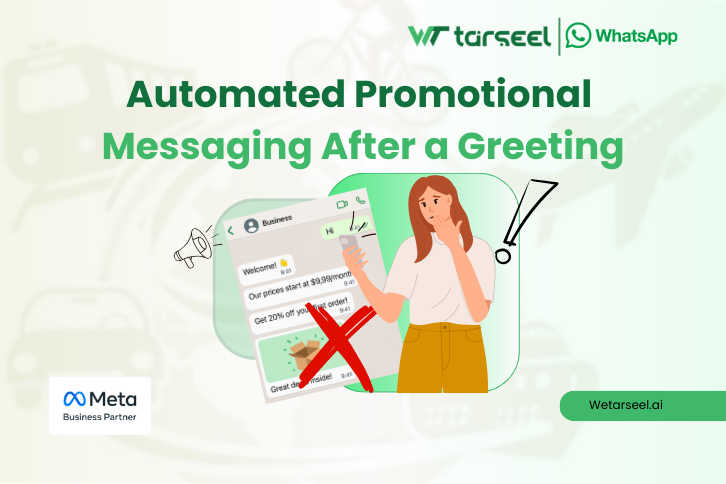
WhatsApp Business account restriction is mainly due to automated promotional messaging, not message content.
Sending pricing, offers, images, or videos after a “Hi” violates WhatsApp Business Policy.
Unsolicited marketing without explicit opt-in triggers Meta’s spam detection.
WhatsApp evaluates automation patterns and message sequencing, not single messages.
Marketing messages require approved templates or clear user intent.
WhatsApp Business restrictions or whatsapp business account ban are rarely caused by obviously illegal or harmful content. In most cases, they result from behavioral violations, such as how messages are sent, how automation is used, and whether user consent exists.
Below is a complete breakdown of the most likely causes. By following the terms and conditions of meta and follow below guide
Table of Contents
1. Automated Promotional Messaging After a Greeting
The most critical issue is the automated response behavior.
When a user sends a simple greeting such as “Hi” or “Hello,” WhatsApp classifies this as the start of a service conversation, not a request for marketing.
Automatically sending a sequence of messages that includes:
- A welcome message
- Product descriptions
- Pricing details
- Delivery information
- Images and videos
- Promotional offers
is treated as unsolicited marketing.
WhatsApp policy explicitly prohibits sending promotional content unless the user has clearly opted in to receive it. A greeting alone does not constitute consent.
From Meta’s perspective, this behavior resembles broadcast-style marketing, even if messages are sent one-on-one.
2. Sending Multiple Promotional Messages in Succession
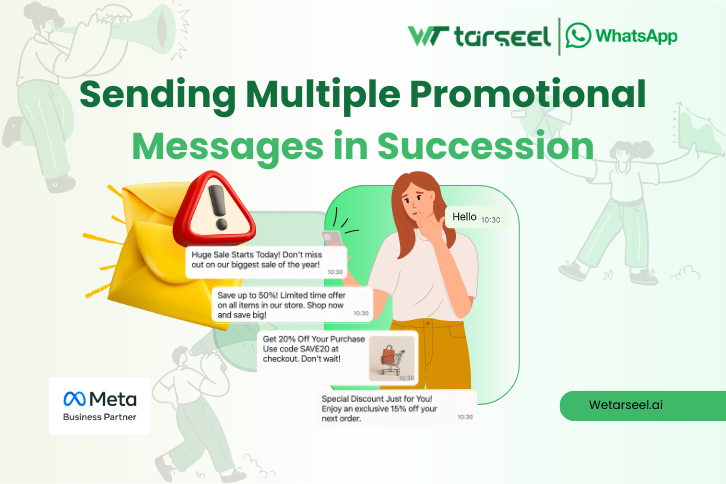
Sending several messages back-to-back immediately after a user’s first message is a major enforcement trigger.
This includes:
- Multiple text messages
- Sequential product explanations
- Pricing followed by offers
- Delivery promises or discounts
Even if each message is individually compliant, the sequence itself violates policy when it delivers marketing content without explicit user intent.
WhatsApp’s systems are designed to detect patterns that resemble bulk outreach or scripted promotional funnels.
3. Automatic Sending of Images, Videos, and Audio
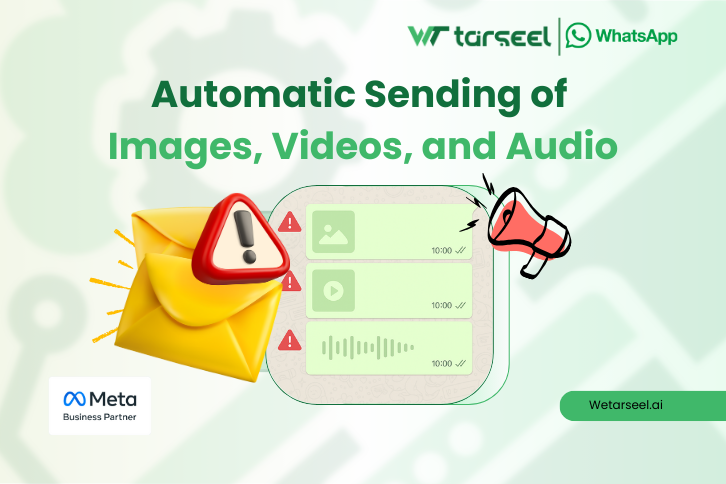
Meta applies significantly higher scrutiny to accounts that automatically send media files.
Automatically delivering:
- Images
- Videos
- Audio messages
- Design previews
- Catalog-style visuals
without the user explicitly requesting them is a common reason for restriction.
When media is sent:
- Immediately
- In high volume
- As part of a fixed automation flow
- Repeated across multiple users
it is flagged as spam-like behavior, regardless of the business size or legitimacy.
4. Behavioral Patterns Matter More Than Content
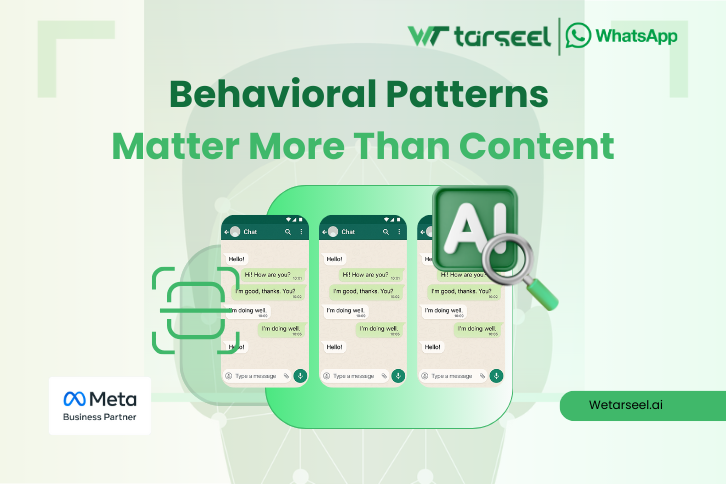
WhatsApp does not evaluate messages in isolation. It evaluates patterns.
The following pattern is frequently flagged:
- User sends greeting
- Business automatically sends text, images, video, and offers
- Same flow is repeated for many users
- All actions are automated
This combination signals abusive automation, even if no single message violates policy on its own.
Meta’s enforcement systems are behavior-driven, not purely content-driven.
5. No Explicit Opt-In for Marketing Content
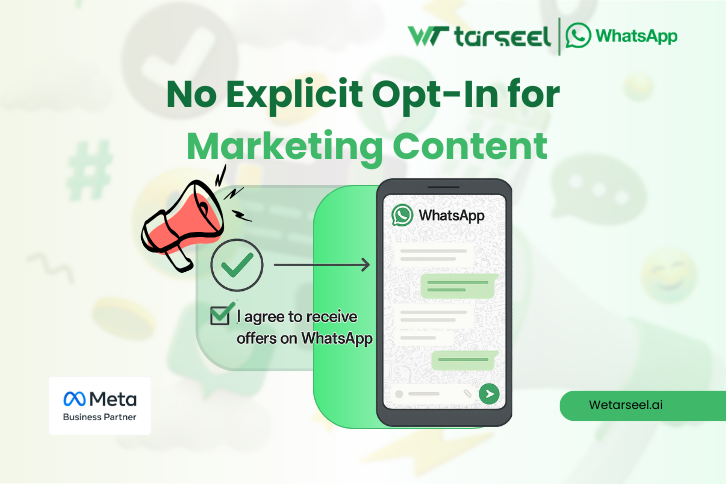
WhatsApp requires that users explicitly opt in to receive marketing messages.
A valid opt-in must be:
- User-initiated
- Clear about what type of messages will be sent
- Associated with the business identity
- Stored by the business
A user who sends “Hello” has not opted in to receive:
- Product promotions
- Pricing information
- Images or videos
- Offers or discounts
- Delivery details
Sending this content without consent violates the Business Messaging Policy.
6. Promotional Content Inside a Service Conversation
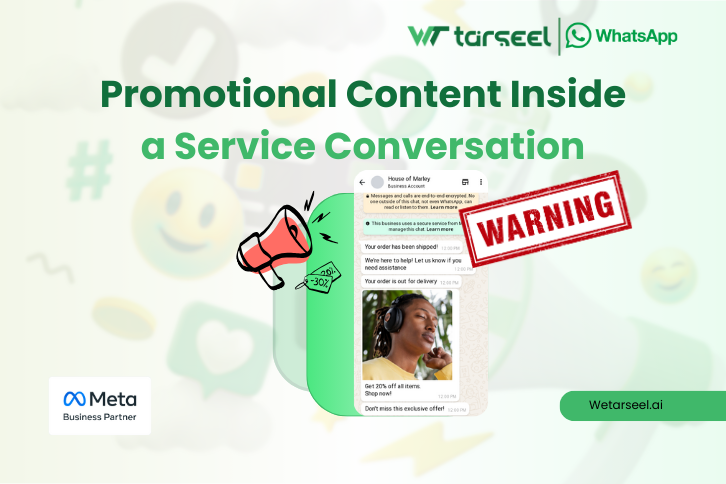
The messages sent included clear marketing elements:
- Product descriptions
- Pricing
- Offers such as free delivery on bulk orders
- Visual promotional material
Marketing content must be sent using:
- Approved marketing templates
- A paid marketing conversation
- Clear user-initiated intent
Sending marketing content inside a standard service conversation, without a template, is a policy violation.
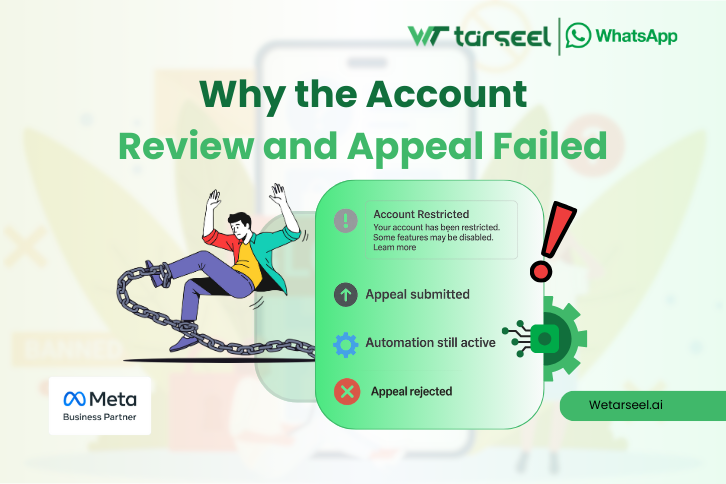
Why the Account Review and Appeal Failed

When an account is restricted, Meta reviews:
- Historical messaging behavior
- Automation logic
- Frequency and repetition of promotional content
- Media usage patterns
If the automation remains active during the appeal process, the restriction is almost always upheld.
At that point, Meta interprets the behavior as intentional misuse, not a configuration error.
Appeals that focus only on message wording, while ignoring automation behavior, typically fail.
Meta's Updated Enforcement
- Meta states that businesses must not send messages users have not explicitly opted in to receive, and that consent must be clearly obtained and documented by the business.
- WhatsApp requires promotional or marketing messages to be sent only through approved message templates or after clear user intent is established, not as part of default service replies.
- Meta evaluates messaging behavior patterns, including frequency, repetition, sequencing, and automation, when enforcing WhatsApp Business policies, not just individual message content.
- Message templates that do not align with their declared category may be reclassified or restricted by Meta, even if they were previously approved.
What Must Change for Future WhatsApp Business Accounts?
To operate compliantly:
1- Limit Automated Replies
Only send a single, neutral welcome or service message.
2- Remove Auto-Sent Promotional Content
Promotions should be sent only:
- After the user explicitly asks
- Or via approved marketing templates
3- Stop Auto-Sending Media
Images, videos, and catalogs should be sent only when requested.
4- Implement a Clear Opt-in Flow
Example:
“Contact us on WhatsApp to receive product details and offers.”
5- Monitor Message Repetition
Identical message sequences sent to multiple users significantly increase restriction risk.
Conclusion
Most WhatsApp Business restrictions happen because of how messages are sent, not because the business is doing something illegal. Sending promotions, prices, images, or videos automatically right after a greeting can be seen as unwanted marketing, even if the content looks normal.
WhatsApp checks user consent, message timing, and automation behavior. If marketing content is sent without clear user interest or approval, accounts can be restricted. To stay safe, businesses should reply simply at first, wait for the user to ask for details, and send promotions only after proper opt-in.
On WhatsApp, sending less at the right time works better than sending everything at once.
-
1. Why is my WhatsApp Business account restricted?
A whatsapp business account restriction usually occurs because Meta’s automated systems detected a "spam-like" behavioral pattern. The most common whatsapp account restriction reasons include sending automated pricing or media immediately after a user says "Hi," failing to secure an unsolicited messages opt-in, or having a high "Block" rate from users.
-
2. What does the "This account can no longer use WhatsApp Business" message mean?
If you see the message: "this account can no longer use whatsapp business we have completed your review and found this account's activity did not follow the whatsapp business messaging policy or the meta commerce policy," it means your account has been permanently banned. This often happens if an appeal was rejected because the business continued to use high-risk automation during the review process. -
3. What are the main whatsapp business account restrictions triggers?
In 2026, Meta focuses on whatsapp restriction triggers like:
• Immediate Media: Automatically sending images or videos without the user asking for them.
• Poor Sequencing: Sending multiple promotional messages in a row (e.g., Welcome + Catalog + Discount).
• Policy Violations: Not following the meta commerce policy regarding prohibited goods or services.
-
4. How can I avoid bans using the Wetarseel WhatsApp Business API?
To avoid bans, businesses are moving away from the standard app. When you use wetarseel whatsapp business api, you gain several protections:
• Approved Templates: Your marketing messages are pre-cleared by Meta, preventing whatsapp business restricted status.
• Official Opt-in Flows: Wetarseel helps you set up clear consent paths so you never send unsolicited messages.
• High Quality Rating: The API environment is designed for scale, allowing you to reach thousands of customers daily while maintaining a "Green" health status.
-
5. My whatsapp business account is restricted; can I fix it?
If your whatsapp business account is restricted but not yet permanently banned, you must immediately stop all automation and request a review. Ensure you have removed any auto-replies that send promotional content. For a detailed roadmap on recovery, visit the Wetarseel Ban & Restriction Guide.
Start using whatsapp API Now Scale your business
Have what it takes to be one of us.
14-day trial, no credit card required.