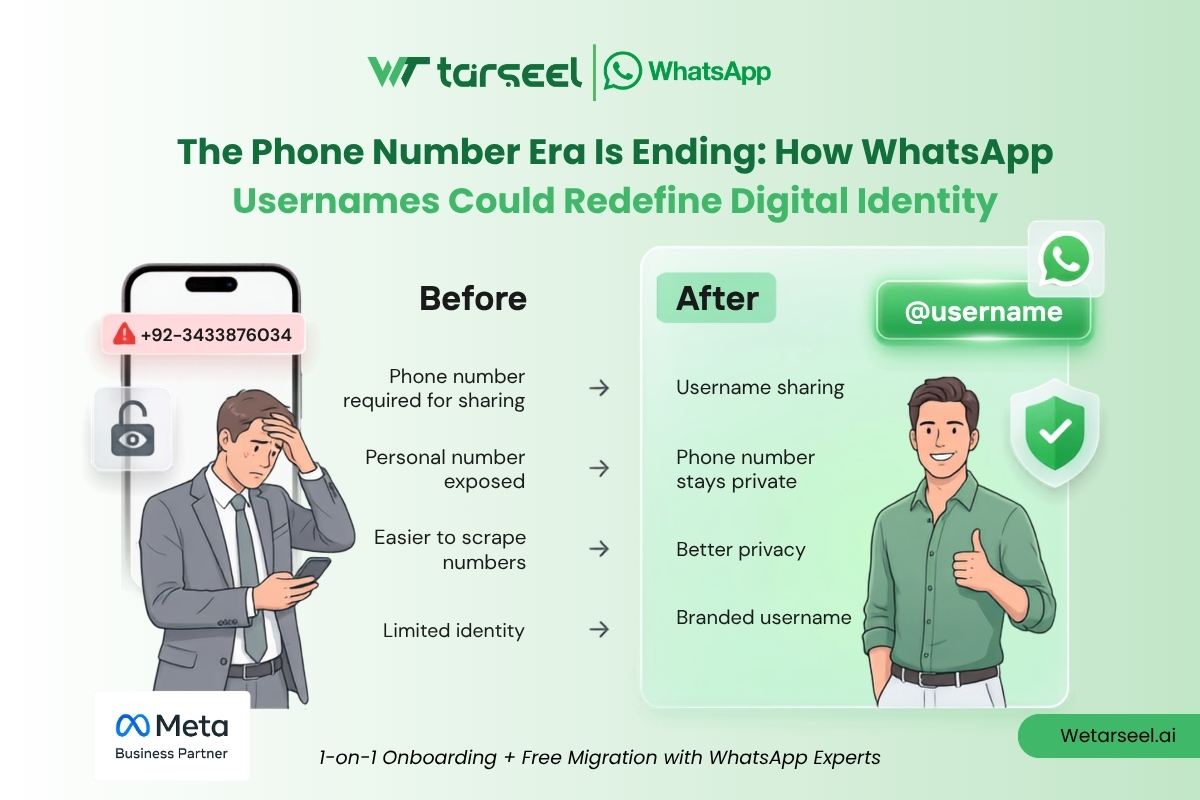
WhatsApp Usernames at a Glance
✔ Hide your phone number
✔ Share a unique username
✔ No public username directory
✔ Phone number still required
✔ Optional username key
✔ Rolling out over the coming months
For more than 15 years, one thing has defined every WhatsApp account: a phone number.
Whether you were messaging a friend, contacting a business, joining a community, or reaching out to someone for the first time, sharing your phone number was the only way to connect. That long-standing model is finally changing.
WhatsApp has officially introduced usernames, allowing people to reserve a unique identity that can be shared instead of a phone number. While accounts will still require a phone number for registration, the new system lets users start conversations without exposing one of their most personal pieces of information.
At first glance, usernames may seem like just another feature. In reality, they represent one of WhatsApp’s most significant privacy updates to date—and a major step toward a more modern way of communicating online.
WhatsApp Finally Moves Beyond Phone Numbers
With more than 3 billion monthly users, WhatsApp is no longer just a messaging app. It has become a platform for personal conversations, business communication, customer support, online communities, education, and even commerce.
Until now, every interaction began with a phone number.
The new username system changes that experience.
Instead of giving someone your number, you’ll be able to share a unique username.
The person on the other end can start a conversation using that username without ever seeing your phone number, unless you choose to reveal it.
According to WhatsApp, username reservations are opening first, with the complete feature rolling out gradually over the coming months.
What Are WhatsApp Usernames?
The primary goal of usernames is privacy.
Sharing a phone number with strangers, online sellers, community members, or new business contacts has always required users to reveal personal information before a conversation even begins. Usernames remove much of that friction by allowing people to communicate without exposing their phone numbers.
This makes WhatsApp better suited for situations such as:
Buying and selling through online marketplaces
Connecting with new professional contacts
Joining communities and interest groups
Speaking with businesses and customer support
Sharing contact details publicly without revealing a personal number
Importantly, this does not eliminate phone numbers from WhatsApp. Every account will still require one for registration and account management. The difference is that your phone number no longer has to become your public identity.
How the Username Feature Works
WhatsApp has designed usernames with both simplicity and security in mind.
Users can reserve a unique username before the broader rollout to reduce conflicts as the feature becomes available worldwide.
Several safeguards have also been built into the system:
Usernames are optional.
Phone numbers remain required for account registration.
There is no public searchable username directory.
Someone generally needs to know your exact username before starting a conversation.
Users can change their usernames if needed.
An optional username key can add another layer of privacy by requiring both the username and the key before someone can initiate contact.
This approach differs from traditional social media platforms, where usernames are often publicly searchable and easily discoverable.
Built-In Protection Against Scams and Impersonation
One of the biggest challenges with any username-based platform is impersonation.
WhatsApp says it has already taken steps to reduce that risk by reserving usernames for public figures, government organizations, celebrities, and major brands. The company is also restricting misleading look-alike usernames to help protect users from scams and fake accounts.
Businesses and creators may also be able to claim usernames that match their existing Facebook or Instagram identities, helping maintain consistent branding across Meta’s platforms where available.
These measures aim to build trust while preserving the privacy benefits that usernames introduce.
What It Means for Businesses and the WhatsApp Business API
Although WhatsApp has not announced any changes to the WhatsApp Business Platform or WhatsApp Business API alongside usernames, the update still carries important implications for businesses.
A recognizable username is easier to remember, easier to share across marketing channels, and offers customers an additional layer of privacy when initiating conversations.
For brands that rely on WhatsApp for customer engagement, support, or sales, usernames could strengthen brand recognition by giving customers a memorable identity instead of a phone number.
The feature may also encourage more first-time conversations, particularly from users who were previously hesitant to message a business because they had to exchange phone numbers.
Any broader impact on business messaging workflows or API functionality will depend on future announcements from Meta.
Whatsapp API Pricing: All You Need to Know in 2026
A Shift Toward Privacy-First Messaging
WhatsApp has long differentiated itself through end-to-end encryption, ensuring that only the sender and recipient can read message contents. Usernames extend that privacy philosophy beyond messages themselves by helping protect users’ contact information.
The feature also brings WhatsApp closer to other messaging platforms that already support usernames, while maintaining its own approach to privacy through limited discoverability and anti-impersonation safeguards.
Rather than turning WhatsApp into another social network, the company appears to be focusing on making conversations more private, secure, and user-controlled.
The Bigger Picture
Some updates add convenience. Others reshape how people interact online.
WhatsApp usernames fall into the second category.
They don’t replace phone numbers, and they don’t change how end-to-end encryption works. Instead, they change the first step of every new conversation by giving users greater control over what personal information they share.
For individuals, creators, businesses, and organizations alike, that represents a meaningful evolution in how digital identity works on one of the world’s largest communication platforms.
As the feature rolls out globally over the coming months, WhatsApp will move beyond a platform where every connection begins with a phone number—and toward one where privacy comes first.
Frequently Asked Questions (FAQs)
-
What are WhatsApp usernames?
WhatsApp usernames allow people to connect without sharing their phone numbers. Instead of giving out a personal number, users can share a unique username while still keeping their account linked to a phone number.
-
Do WhatsApp usernames replace phone numbers?
No. A phone number is still required to create and manage a WhatsApp account. Usernames simply allow users to communicate without revealing that number to new contacts.
-
Can businesses use WhatsApp usernames?
Businesses can reserve usernames that align with their existing Meta identities where available. While Meta has not announced changes to the WhatsApp Business API, usernames may improve brand recognition and customer privacy.
-
Is the WhatsApp username feature available now?
WhatsApp has begun rolling out username reservations, with the complete feature becoming available gradually over the coming months.
-
Are WhatsApp usernames searchable?
No. WhatsApp has confirmed there will be no public username directory. People generally need to know your exact username before they can start a conversation with you.