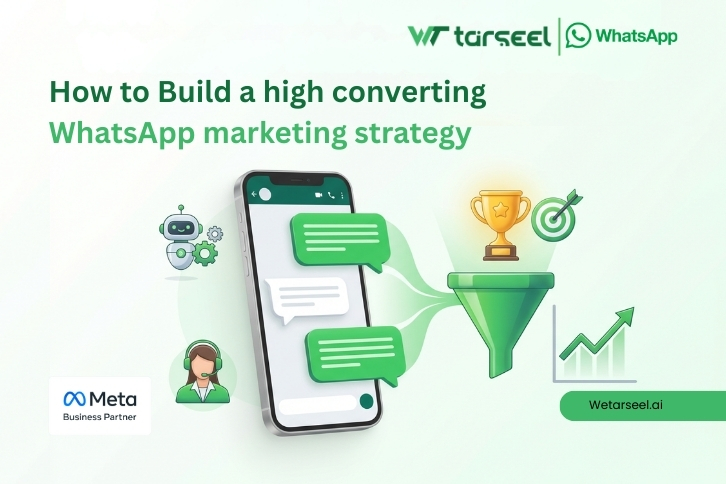
A WhatsApp marketing strategy is a structured way to use WhatsApp to communicate with customers, build trust, and drive real business results like leads, sales, and repeat purchases.
What makes WhatsApp different is simple: people actually read WhatsApp messages.
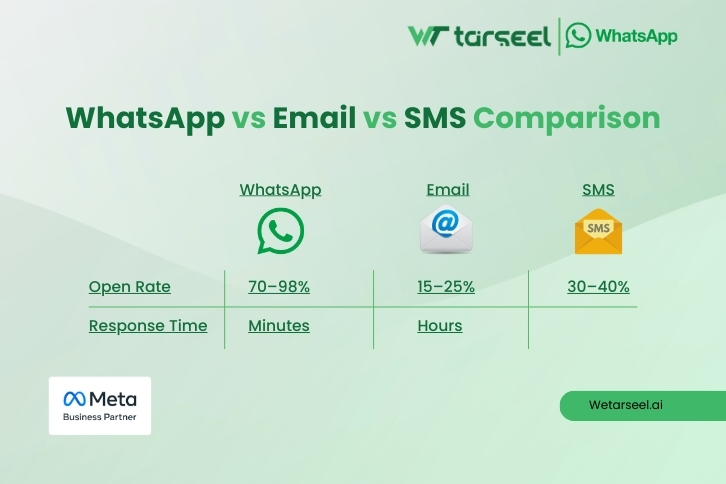
Studies and industry reports consistently show WhatsApp message open rates between 70% and 98%, while most marketing emails struggle to cross 20%. People also reply faster — often within minutes, not hours.
This is why many businesses now ask one key question:
How do you build a WhatsApp marketing strategy that actually converts, without spamming users?
This guide answers that question in detail.
If you want WhatsApp to become a serious growth channel, not just another broadcast tool, this guide is for you.
What Is a WhatsApp Marketing Strategy?
A WhatsApp marketing strategy is a planned approach to using WhatsApp for business communication with customers who have given consent (opt-in).
It includes:
- How do you collect contacts
- How you segment your audience
- What type of messages do you send
- When you send them
- How you measure results
A good WhatsApp strategy focuses on conversation and value, not mass promotions.
Instead of:
“Buy now! Limited offer!”
A strong strategy thinks:
“What message would genuinely help this customer right now?”
This mindset is the foundation of high conversion.
Top WhatsApp Marketing Strategies for B2B
Why WhatsApp Marketing Converts Better Than Other Channels
WhatsApp is not just another messaging app. It behaves very differently from email or social media.
1. Extremely High Visibility
Most people have WhatsApp notifications turned on. Messages appear directly on the lock screen. This is why WhatsApp open rates are often 3–5 times higher than email.
2. Faster Response Time
WhatsApp is a real-time communication tool. Customers reply faster because:
- They already use WhatsApp daily
- It feels personal, not promotional
- No login or app switching is needed
3. Higher Trust Level
WhatsApp feels like a private space, not a public feed. When brands respect this space, trust increases, and trust drives conversions.
4. Rich Message Formats
WhatsApp supports:
- Images
- Videos
- Product catalogs
- Buttons and quick replies
- Location sharing
This helps users understand and act faster.
WhatsApp Marketing vs SMS Marketing: Which One Truly Wins in 2025?
Step-by-Step: How to Build a High-Converting WhatsApp Marketing Strategy
Step 1: Set Clear and Measurable Goals
Before sending a single message, define your goal.
Common WhatsApp marketing goals:
- Lead generation
- Cart recovery
- Order updates
- Customer support
- Repeat purchases
- Event registrations
Bad goal: “Increase sales”
Good goal: “Recover 15% of abandoned carts using WhatsApp in 30 days”
Clear goals guide message type, timing, and success measurement.
Step 2: Collect Opt-In the Right Way
WhatsApp is a permission-based channel. Messaging users without consent can damage trust and may violate WhatsApp policies.
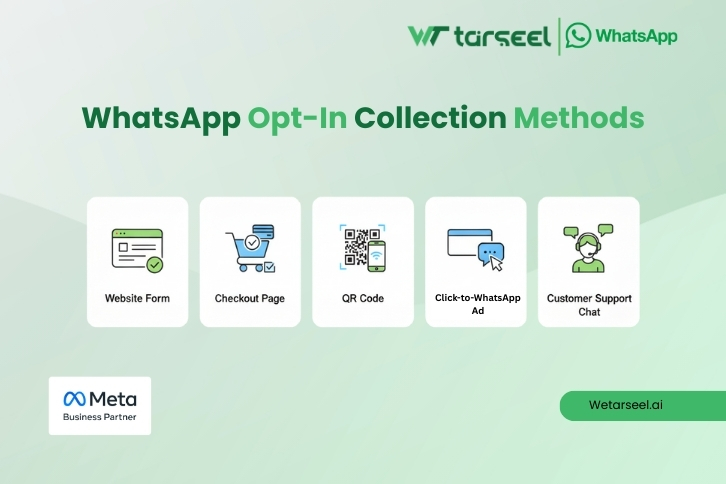
Effective opt-in methods:
- Website forms with a WhatsApp checkbox
- Checkout page opt-in
- QR codes in stores or on packaging
- Click-to-WhatsApp ads
- Customer support conversations
Always tell users:
- What type of messages they will receive
- How often
- How to opt out
This transparency builds long-term engagement.
Step 3: Segment Your Audience (This Drives Conversions)
Sending the same message to everyone reduces results.
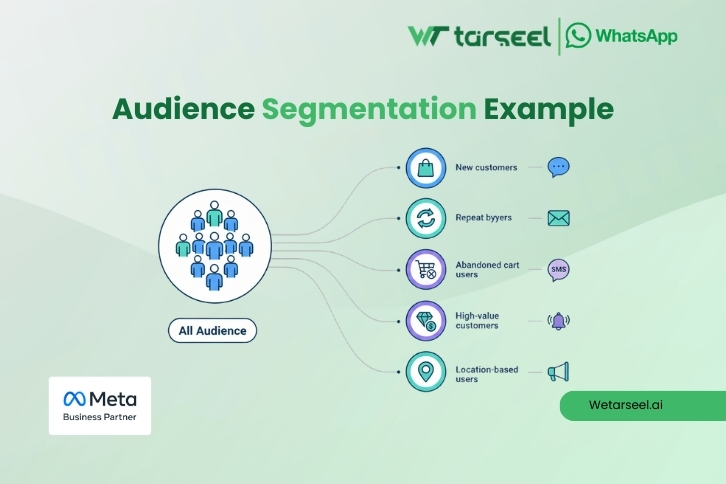
High-converting WhatsApp campaigns use segmentation.
Examples:
- New leads vs existing customers
- First-time buyers vs repeat buyers
- Abandoned cart users
- High-value customers
- Location-based segments
A personalized message to a smaller group almost always outperforms a generic broadcast.
Step 4: Create Value-First Messages
This is where most WhatsApp strategies fail.
WhatsApp users do not want ads, they want helpful, relevant information.
Good message principles:
- One clear purpose per message
- Simple language
- Short paragraphs
- Clear call-to-action
- Helpful tone, not salesy
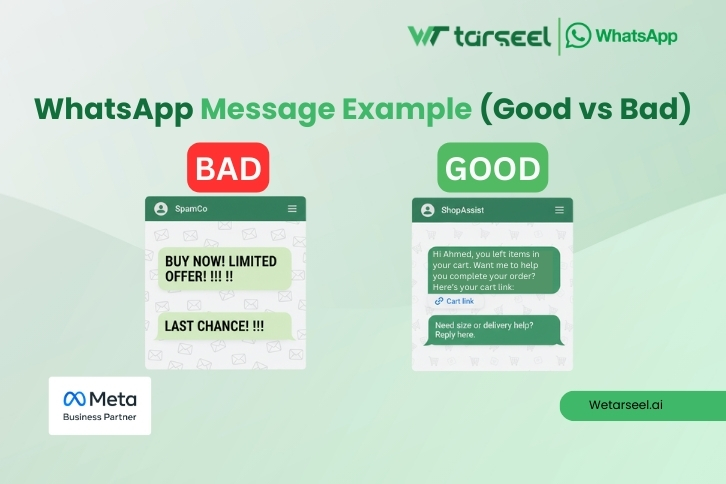
Example (Cart Recovery):
❌ “Complete your purchase now!”
✅ “Hi Ahmed, you left these items in your cart. Here’s the link if you still want them. Let us know if you have questions.”
Value-first messages feel human, and humans convert better.
Step 5: Use Automation Without Losing the Human Touch
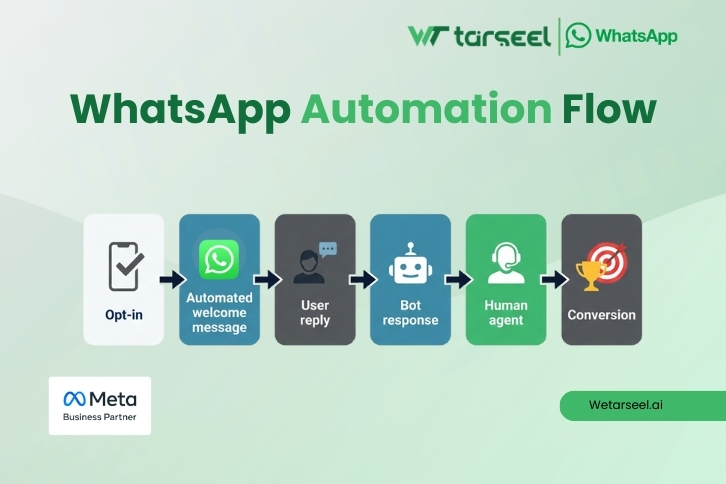
Automation is essential for scale, but it should feel natural.
High-converting automated flows:
- Welcome message after opt-in
- Order confirmation and delivery updates
- Abandoned cart reminders
- Re-engagement after inactivity
Best practice:
- Automate the first message
- Allow easy handover to human support
- Use quick reply buttons to guide the conversation
Automation should assist, not replace, real conversation.
Step 6: Optimize Timing and Frequency
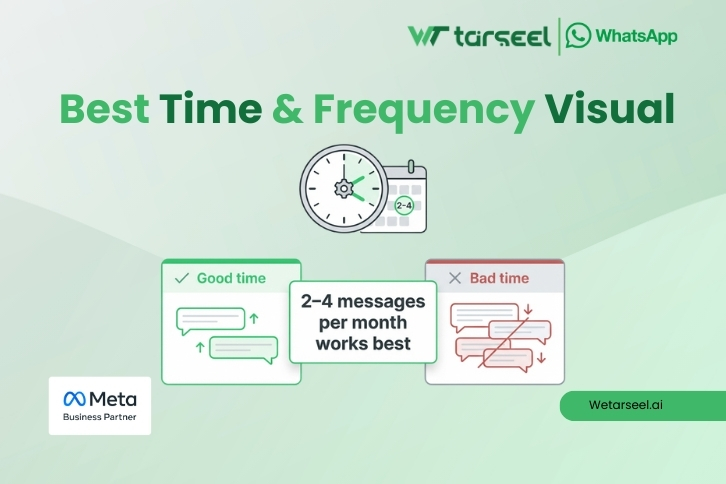
Even good messages fail if timing is wrong.
General best practices:
- Avoid late night messages
- Respect local time zones
- Do not send daily promotions
- Watch user engagement patterns
For many businesses, 2–4 messages per month per user perform better than weekly promotions.
WhatsApp Marketing Best Practices That Actually Work
- Always include opt-out instructions
- Use customer names when possible
- Send images only when they add clarity
- Test different message formats
- Keep links relevant and minimal
- Use WhatsApp Status for soft promotion
- Respond quickly to replies
These practices protect trust, and trust drives conversion.
How to Sell on WhatsApp Easily: The Ultimate Guide for 2026
Common WhatsApp Marketing Mistakes to Avoid
- Sending messages without consent
- Treating WhatsApp like email marketing
- Over-messaging users
- Ignoring replies
- Not tracking performance
One bad experience can make users block your number permanently.
Metrics That Measure a High-Converting WhatsApp Marketing Strategy
Track what matters:
- Open rate
- Click-through rate
- Reply rate
- Conversion rate
- Revenue per campaign
- Opt-out rate
High open rate but low conversion usually means message quality needs improvement.
Tools to Scale Your WhatsApp Marketing Strategy
As volume grows, businesses usually need:
- WhatsApp Business API
- Automation workflows
- Chatbots for first responses
- Analytics dashboards
- CRM integration
Choose tools based on features and reliability, not hype.
Conclusion: WhatsApp Is a Conversion Channel, If Used Correctly
A high-converting WhatsApp marketing strategy is not about sending more messages.
It is about sending the right message to the right person at the right time.
Businesses that respect user consent, focus on value, and use data-driven optimization consistently see better engagement and higher conversions.
When done correctly, WhatsApp becomes one of the most powerful and trusted marketing channels available today.